
"environmental factors"
600 article(s) found
Five Environmental factors for growing Coffee
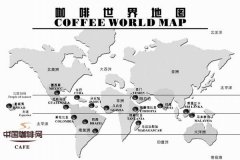
Coffee can not be grown in any environment, because it is originally a plant growing in a tropical rain forest. In systematic development, coffee forms the habit of calm wind, cool, shaded or semi-shaded and humid environment. Therefore, coffee has strict requirements on planting conditions. We call the strips on both sides of the equator, between latitudes 25 degrees south and north, suitable for coffee growth as coffee belts.

Relationship between planting environmental conditions and grade names
Finally, we need to understand the relationship between planting altitude and coffee grade. Arabica beans grown at higher altitudes mature more slowly than those grown at lower altitudes, produce denser beans, and exhibit higher acidity and complexity in the cup. But in most of the coffee world's cognitive rules, the factor of growing altitude is not necessarily graded.

Factors affecting the quality of espresso-espresso and American coffee
The factors that affect the quality of espresso-espresso and American coffee are pre-soaking time. Before the Espresso machine starts the main extraction step, it is best to let the coffee powder be filled with saturated water. This action is called pre-immersion and must last for 1 to 2 seconds. Barista training course: factors affecting the quality of espresso? The second is water quality. The water quality of brewing coffee will be shaded.

Important conditions for coffee cultivation three necessary environmental factors for planting coffee trees
There is a noun called coffee belt. There are more than 60 coffee producing countries in the world, most of which are located in the tropics and subtropics between the Tropic of Cancer (latitude 2326). This coffee growing area is called coffee belt (Coffee Belt) or coffee area (Coffee Zone). The annual average temperature of the coffee belt is above 20 ℃, because the coffee tree is a tropical plant, if the temperature is below 20 ℃.

Espresso with changes in environmental factors
What is causation-the factors that affect the quality of espresso in the process of cooking espresso are called variants. Some variables are caused by different human skills, while others are not easy to control. For example, the environment of nature is always changing all the time. In the face of these uncertainties, the bar staff must maintain mobility to adjust the cooking at all times.

Seven reasons affecting the aroma and flavor of coffee: the brewing method of environmental roasting degree of coffee beans
As coffee lovers, we know that you can find a wide range of features in coffee. From simple tones to sweet fruit, to flowers and tea, our favorite drinks bring an incredible taste experience. But what determines the flavor of your coffee? There is no simple answer to this question. The science behind the flavor of coffee is still in place.
Technology and Environmental factors of growing Coffee in Coffee Garden
Coffee comes from Ethiopian curry. In Colombia, it was brought by a priest from the French Antilles via Venezuela in 1808. At present, Colombia is the fourth largest coffee producer in the world, behind Brazil, Vietnam and Indonesia. There are four types of coffee trees in the world, namely, ARABICA, ROBUSTA and LIBERICA.

Environmental factors change the taste of Italian concentrate? Temperature Sunshine Humidity
What is the variable------------- Some variables are caused by different human skills, and some variables are not easy to control. For example, the environment of nature is always changing all the time. In the face of these uncertainties, bar staff must always maintain flexibility to adjust the brewing

Pregnant women "drinking" coffee may give birth to deformed children?
It is reported that as many as 1.0012 billion cases of birth defects occur in China every year. Cleft lip and palate, neural tube defect, polydactyly, congenital heart disease and hydrocephalus are the five major birth defects that plague newborns in China. At the top of the list is neonatal neural tube defects. There are many factors affecting neonatal birth defects, such as heredity, environment, biology, drugs and so on.

What kind of environmental conditions do you need to grow coffee trees? how much is the Alishan mocha coffee?
The origin of the coffee tree is Ethiopia in Africa. In botany, coffee trees belong to the evergreen trees of the subgenus Rubiaceae, and coffee beans, commonly known as coffee beans, are the seeds of the fruit of coffee trees, just because they are shaped like beans, so they are called coffee beans. Climate is the decisive factor for coffee cultivation. Coffee trees are only suitable for growing in the tropics or subtropics, so latitude 25 is south and north.

Nine factors of coffee taste influenced by common sense of coffee
Coffee tastes unique and delicious and is liked by many people. Do you know what factors affect the taste of coffee? Although many people like to drink coffee, they do not know the common sense of coffee. Today, the editor will introduce you to the relevant knowledge of coffee, telling you about the nine factors that affect the taste of coffee and what are the benefits of drinking coffee. The common sense of coffee everyone knows what it is.

Starting from Coffee cultivation-the upcoming planting and Environmental problems in Coffee growing areas in Yunnan
Professional coffee knowledge exchange more coffee bean information please follow the coffee workshop (Wechat official account cafe_style) A coffee tree bears fruit several times a year. Coffee is one of the agricultural products, and its yield varies by region, climate, altitude, planting mode and other factors. From coffee sweeping the world to becoming the most popular drink in western countries, the whole world

Nine factors of coffee taste influenced by common sense of coffee
Women who drank more than three cups of caffeinated coffee a day had a 21% lower risk of basal cell cancer than those who drank less than one cup a month. Drinking coffee can help people with heavy drinking, overweight, diabetes or iron overload reduce the risk of liver disease, but there is no evidence that coffee and tea can reduce the risk of chronic liver disease from fatty liver or viral hepatitis. Coffee tastes unique and delicious. Copy that.

The processing method of Danqi Meng Coffee introduction to the Environmental production area of Cooperative planting Manor
Beans taste different according to the region where they grow. The factors that affect the taste are the variety of coffee trees, the soil properties of growth, the climate and altitude of the cultivation garden, the care of picking results, and the process of bean treatment, etc. These elements vary from region to region, while bakers and integrated manufacturers look for the characteristics of each region, so that the comprehensive products have their own unique typical flavor. You can try to chase.
Specialty coffee Fine Coffee (3) factors determining Coffee Taste
It was said before that among the factors that affect the taste of a cup of coffee, raw beans account for 60%, roasting accounts for 30%, and production accounts for 10%. This is a general analysis, so throughout the life process of coffee beans, the factors that from crop to cup affects the taste of a cup of coffee can be infinitely refined. The first is the variety. Sow melon, reap beans, no matter whether it is to plant melons or beans, seed selection is the most important, of course I
Introduction to the planting Environmental treatment of Coffee beans in Santa Rita Manor, Colombia
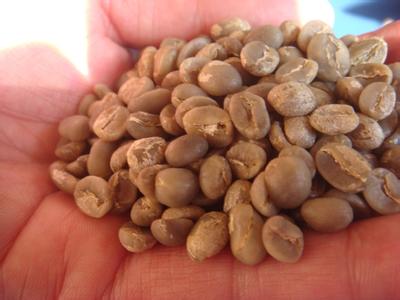
The Environmental treatment of Coffee beans at Santa Rita Manor in Colombia the suitable climate in Colombia provides a real natural pasture for coffee. Coffee trees in Colombia are mainly cultivated in the Andes, on steep slopes about 1300 meters above sea level, where the annual temperature is about 18 degrees Celsius, annual rainfall is 2000 to 3000 millimeters, and latitude 1-11-15.

Specialty Coffee III
Before saying that in the factors affecting the taste of a cup of coffee, raw beans account for 60%, roasting accounts for 30%, production accounts for 10%, this is a rough analysis, then throughout the life course of coffee beans, from crop to cup factors affecting the taste of a cup of coffee can be infinitely refined. First, the variety. Sow melons and reap melons, sow beans and reap beans. Whether you plant melons or beans, seed selection is the first priority. Of course, I
Boutique Coffee (specialty coffee)
It was said before that among the factors that affect the taste of a cup of coffee, raw beans account for 60%, roasting accounts for 30%, and production accounts for 10%. This is a general analysis, so throughout the life process of coffee beans, the factors that from crop to cup affects the taste of a cup of coffee can be infinitely refined. The first is the variety. Sow melon, reap beans, no matter whether it is to plant melons or beans, seed selection is the most important, of course I
Basic knowledge of Coffee definition of Fine Coffee
It was said before that among the factors that affect the taste of a cup of coffee, raw beans account for 60%, roasting accounts for 30%, and production accounts for 10%. This is a general analysis, so throughout the life process of coffee beans, the factors that from crop to cup affects the taste of a cup of coffee can be infinitely refined. The first is the variety. Sow melon, reap beans, no matter whether it is to plant melons or beans, seed selection is the most important, of course I

What is the effect of ambient temperature on coffee roasting? how to use the rate of environmental change to improve the baking curve
The environmental change rate is not as good as the rising rate, the bean temperature and the environmental temperature are better. But it is even as important, or even more important. It helps to predict the temperature of the drum, which in turn helps to maintain control during the baking process. What is ambient temperature? If you don't know the ambient temperature first, you can't understand the rate of environmental change. This is the temperature of the air in the drum of the baking machine measured using a thermocouple.